
WhatsApp
019-2817295
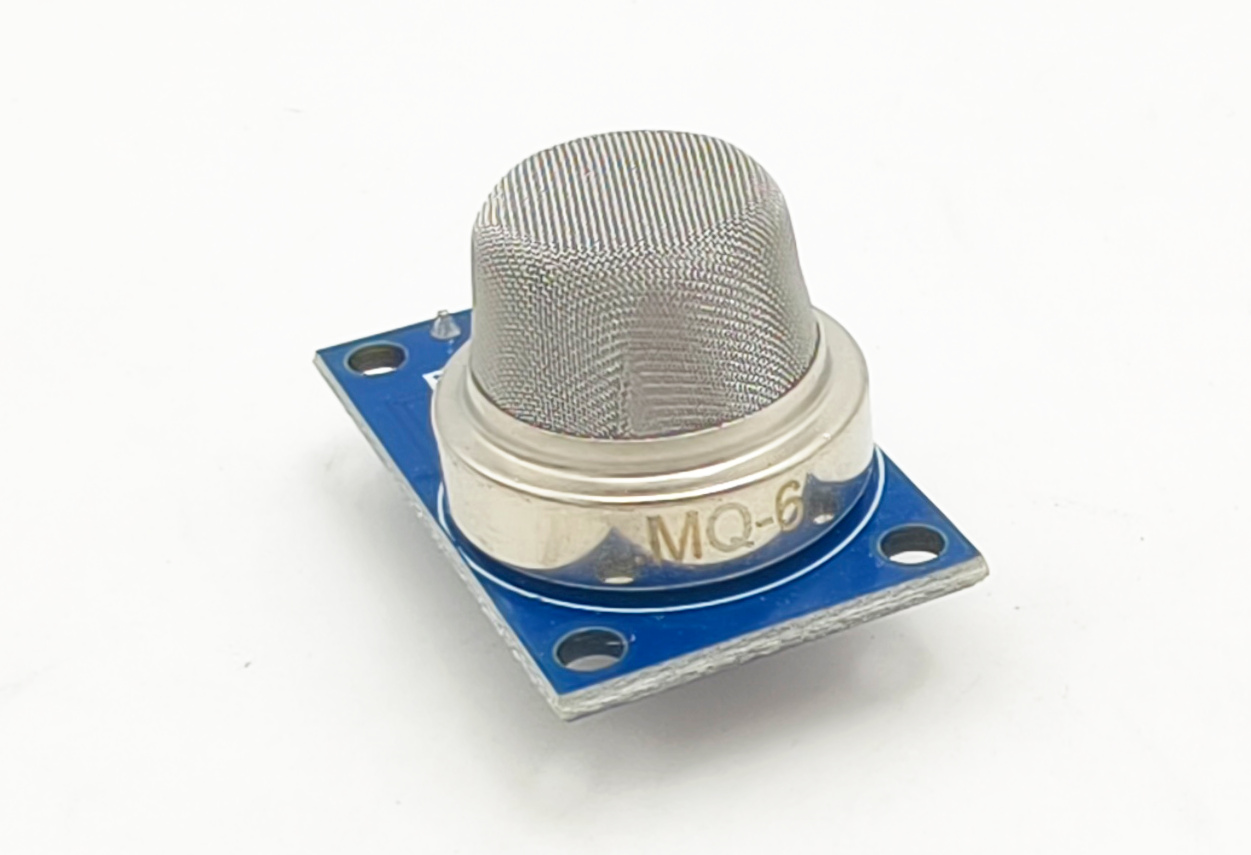
The MQ-6 gas sensor uses tin dioxide (SnO2), a gas-sensitive material with low conductivity in clean air. When combustible gases are present in the sensor's environment, the sensor's conductivity increases with the concentration of the combustible gas in the air. A simple circuit can convert this conductivity change into an output signal corresponding to the gas concentration. The MQ-6 gas sensor has high sensitivity to propane, butane, and liquefied petroleum gas (LPG), and also exhibits good sensitivity to natural gas. This sensor can detect a variety of combustible gases and is a low-cost sensor suitable for various applications.
Module Applications: Suitable for household or industrial applications requiring the detection of LPG (liquefied petroleum gas), butane, propane, and LNG (liquefied natural gas). Excellent resistance to interference from ethanol vapor and smoke.
*Note: After powering on, the sensor requires approximately 20 seconds of preheating for the measured data to stabilize. Sensor heating is normal due to the internal heating element; however, if it becomes too hot to touch, it is abnormal.